Monday, June 17, 2013

HBS Retrospective

graduationAfter three long (stuffed startup in between the first and second) years I’ve finally graduated from HBS.  Looking back, it was an unquestionably amazing experience in all of the most unexpected ways.

I originally came to business school for three primary reasons

  • Credibility – HBS is one of the best name-brand degrees out there.
  • Financial Toolkit – I was working on a company with good exit potential and wanted to understand just how to value it (google failed me!)
  • Professional Contacts – I wanted to meet likeminded people and tap into great new professional opportunities.

As it turns out the only thing I really got from the experience that I expected was the financial toolkit.  I learned a TON about how acquisitions are valued in theory (discounted cashflow) as well as reality (market comps and asset values).  However, as an HBS grad I found I had less credibility than when I was a Microsoftie and never ended up leveraging the relationships I developed at HBS for professional reasons (less than 2% of HBS goes into entrepreneurship).

What I did leave the school with were the following:

  • Community – This was the most valuable and surprising to me.  The cohort I came to know and love in both years was truly amazing.  Not only were they the accomplished and ambitious young professionals I expected, but they were incredibly kind hearted and fun loving human beings.  I know that I’ll forever be a part of the the best social club in the world.
  • Nothing to prove – Up to this point I’d always felt like I had to prove myself to society.  Be it by garnering recognition or financial rewards – there was always another rung to climb.  HBS does provide a cloak of accomplishment (you went there?  must be doing something right) universally recognized.  Now I can settle down and do what feels right to me – not society.
  • No Fear – Getting the degree means you never have to worry about money again.  As far as I know nobody with an HBS MBA has struggled to find a job that pays enough to cover basic needs.  It’s a meal card for the rest of my life.  This frees up the rest of my time and risk appetite to do only what I love with no fear.  One of my favorite professors (Shikhar Ghosh) is fond of saying his students have around 2500 weeks to live.  Use them wisely.   

In short, I came to HBS to improve my career and they ended up setting the foundation for the rest of my life.  The last three years will easily be the most transformational in my life, and yet I couldn’t be more excited about the decades to (hopefully) come!

Sunday, April 7, 2013

How to Discover the Perfect Product Design

As an engineering my first instinct is to code first and ask questions later.  At best this results in a product I love, but nobody else cares about.  At worst, it can tie up an entire development team coding product iterations for ages.  So, how can we build the right product the first time around? 

Customer Development.

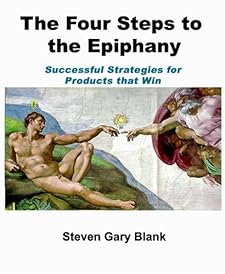
This is a completely customer centric approach to design pioneered by Steve Blank (who has built several successful companies with it himself).   The basic idea is to start by understanding the customer and then to create a product that suits their needs.  This is the opposite of many traditional companies that build products fist and then test market adoption afterwards.

The fundamental reason this works is that for many products you can test market adoption without a product. 

From my experience 80%+ of a product is in the design – and can be validated with a high fidelity mockup – which is a tenth of the cost of a prototype.  This means you’re getting 80% of the value at 10% of the price.   And, even is money is no object, it will increase you ability to iterate by 10x.

So practically speaking – how does this work?  Here is my simplified 7 step process:

1 - Start with a Thesis and a Mockup

Spent a day (or less) identifying the customer (ie salespeople) and designing the product they want (a mobile notes platform).

2-Make a List

In Excel make a list with the following columns: first name, last name, email, title, company, notes.  Then fill this sheet with as many names of potential customers as you can find.  Great sources for customers are:

  • Your personal/professional network
  • 2nd degree connections (ask your friends/colleagues if they know potential customers)
  • Alumni networks
  • Linkedin – just search around and send polite messages to relevant folks.
  • Local professional groups.  Most industries have some manner of in person meetings. Just look on google, meetups, blogs to find these.
  • Contact people via twitter/their blog/their personal/company website.

3-Send out Emails

Send the people on the list a short and polite email.  Example:

Hi Mr. Smith,

I’m working on a mobile product for sales people and found your name on Linkedin.  Your experience at ACompany looked very relevant to my project.  Do you have 15 minutes to talk in the next few days? 

Thanks,

Cy

4-Conduct Interviews

Sent a lot of those emails out.  Expect less than half to respond.  For the folks that do set up time to talk in person or over the phone have a script ready.  The conversation can flow naturally, but you want to carefully ask questions that start very broadly and then become narrower.  The goal here is to learn as much as possible about the customer without influencing their perspective with your ideas. Example:

  1. What do you do?
  2. Can you walk me through a typical day for you?
  3. How many in person meetings do you have per week on average?
  4. How do you record notes during these meetings?
  5. How do you use those notes before the next meeting?
  6. Would you use a mobile notes platform?
  7. Would you use this mobile notes platform (show your mockup)?

*Note: surveys DO NOT COUNT.  You need to have a 1:1 conversation with a customer to truly understand every aspect of his or her life possible.  Surveys presume you know all possible answers before they are offered.  You probably don’t.

5-Followup with Iterations

The greatest reward you can give these potential customer for your time is the satisfaction of seeing the impact of their ideas and feedback. Be thankful (and always send a follow-up note).  Also, keep in touch to let them know about subsequently iterations of the product and to continue getting their feedback on your designs.

6- Sell!

Eventually, through many iterations your product should get to the point where customers are excited and ready to buy.  This is the point where begin to build!  Then, when it’s all done you can sell it to a ready and eager customer base waiting to buy!

7-Groom Evangelists

The last, (but not least) step is to followup with customers using your product and improve their experiences.  If they are ecstatic about your product encourage and provide a channel for them to reach other customers (through their own social media networks, a company blog, whitepapers etc).

That’s it!  If you follow these simple seven steps you will avoid the engineer’s folly of building a great product that nobody wants!  As Steve Blank is fond of saying “Get out of the building and talk to customer!”.

Wednesday, March 27, 2013

Finding Founders Post @ HIPPO Reads

image


There’s a new Hippo on the block in high quality content.  After being introduced to Hippo Reads by founder Anna Redmond I’ve really enjoyed learning through their curated content. 

In each ‘curation’ an industry expert leads you through a rich array of secondary content in an essay format.  With topics ranging from Healthcare to Justice the breadth of content and voice of the curators make Hippo Reads a great digital escape where readers can explore a new topic in just a few minutes.

If you want to read more check out their most recent piece on Entrepreneurship (by yours truly): Finding Founders.

Friday, March 22, 2013

Super Simple (aka Ghetto) A/B Testing

Looking to test a couple variants of your landing page?  Sure there are a bunch of great tools out there, but that takes time/effort to find, register, and install on your site. 

If you’re just at the point (like I am) where you want an easy free way to test landing pages quickly.  This little PHP A/B tester is the simplest way to compare two versions of a webpage.  Here’s how it works:

  1. Save on your php enabled web server as something like test.php
  2. A user will go to yourserver.com/test.php
  3. test.php will randomly pick one of two webpages to send them to (ideally a form/google survey where you can collect output)
  4. test.php will record where the user was sent in data.txt
  5. At the conclusion of the test you can easy grab the resulting text file (in this case called data.txt).  Count the number of visits and compared to the number of conversions to get your rate.  The higher number wins!

Code below.  Happy Testing!

<?php

$filename = 'data.txt';
$somecontent = "Placeholder";

//this will pick randomly spit out 0 or 1
$path = mt_rand(0,1);

// Let's make sure the file exists and is writable first.
if (is_writable($filename)) {

    // In our example we're opening $filename in append mode.
    // The file pointer is at the bottom of the file hence
    // that's where $somecontent will go when we fwrite() it.
    if (!$handle = fopen($filename, 'a')) {
         echo "Cannot open file ($filename)";
         exit;
    }
   

/*for the purpose of this test we’re just sending folks to google.com or microsoft.com.  Replace those URLs with desired content */


    if($path>0){
        //Write $somecontent to our opened file.
        if (fwrite($handle, "Google") === FALSE) {
             echo "Cannot write to file ($filename)";
            exit;
        }
        header("Location:
http://www.google.com");
    }else{
        if (fwrite($handle, "Microsoft") === FALSE) {
            echo "Cannot write to file ($filename)";
        exit;
    }
    header("Location:
http://www.microsoft.com");
}   
echo "Success, wrote ($somecontent) to file ($filename)";

fclose($handle);

} else {
    echo "The file $filename is not writable";
}
 
?>

Tuesday, March 19, 2013

How to Hire Great Developers

A recent conversation highlighted the challenge of hiring great developers.  It’s a tough market – demand for technical talent is exploding and the supply isn’t increasing to compensation.  As the talent war heats up prices increase, and even finding talent is hard since nobody good is every looking (they’re choosing between offers). 

Really, this boils down to a sales process.  There’s prospecting (find the people you want) and closing (convincing them to join you!).  While by no means the end-all in recruiting, here are some tactical tips and tactics that have helped me:

Prospecting

  • Friends – by far the best resource is friends and friends of friends.  Ask around the people who already know and like you to see if they have someone in their network they can connect you with.  If it’s a good fit everyone wins!
  • Presentations – there are a ton of opportunities to give presentations at local meetups and events.  This is a great way to get in front of a bunch of people and get them excited about your company  (which you should be doing anyways!)  The best networking will happen when people come up to you afterwards – talk about qualified leads!
  • Online Press – there are a multitude of online press organizations out there.  You should be active pursuing coverage in all of them.  Especially the locally targeted tech ones will be actively read by developers.  If you make a good enough pitch this will bring the most motivated team members through the door.
  • LinkedIn – last but not least!  Look around on LinkedIn for the talent.  See if you're connected, if not it’s worth buying the contact options.  People are usually quite responsive if you make a respectful pitch.

Qualifying

  • Portfolio – what has this developer done? One the job and on the side are both important.  Have the skills you need been demonstrated?  If not I wouldn’t make the hire. 
  • References – this should be obvious, but is often missed.  Ask past employers, colleagues, and just anyone you can about the person.  Will they be a good fit for your team culture?  Will they stick around?   How can you motivate them?

Closing

  • Have the whole team sell them.  Through in person meetings, 1:1s and group emails – make sure they feel desired by the entire team – not just a hiring manager.
  • Make a great offer.  People in general and technical people in particular are usually 1x or 10x.  The best are worth 10x more than average.  So take compensation off the table.  Make them an offer they can’t refuse (say 2x).  It’s worth it.
  • Sell the mission.  Most developers make more than enough money (and have for their entire careers).  They are good because they are smart and seek interesting problems and fun products far above anything else.  Talk about your past wins and future ambitions.  Show them how their work will change the world.
  • Learn to code.  Nothing is worse than a non-technical person trying to close a technical one.  It just doesn’t work well.  Even if you know a little it will help build the trust that you, to some extent, appreciate their talent.

Friday, March 15, 2013

How Powerful Are You?

At startups we often eschew the notion of politics and power. However, it is an inescapable reality of living as the social creatures we are. As I set on a class on exactly this topic: Power and Influence the professor highlighted the best yardstick for power I’ve heard to date:

Who comes to me for advice?

This metric is particularly effective because it neatly captures both dimensions of trust – Competence and Character.  In order to trust someone’s advice you need to believe in their competence (they will provide you with good data) and their character (they have your best interests at heard.  One without the other (ill intentioned intelligence or well intentioned ignorance) is misleading at best.image

Take a couple minutes to map our who trusts you. By these metrics what does your network look like?  How powerful are you?  And, most importantly, how do the people in your circle of trust map to your needs in the relationship (top) row of the Framework for Happiness?

Wednesday, March 13, 2013

A Framework for Happiness

The greatest enemy of happiness and fulfillment is minutia.  It’s all too easy to drown in the trivialities of life and lose sight of the light that is our true aspirations. In a prior post on Time Management highlighted the importance of having clear priorities in order to apply your time efficiency (importance>urgency).  Since they I’ve had many discussions about just how to go about establishing these priorities.   Over time this has evolved into a very simple one page framework:

image

This is designed to be filled from the bottom up – with each layer building on the one before it. 

  • Ethics - At the core is ethical boundaries.  What are things that you need to always or never do?
  • Motivations - Then think about your motivations and their result (your legacy).  What do you want to look back on at the end of your life?
  • Activities – What do you want to spend your time doing in service of your motivations and bounded by your ethics?
  • Relationships – What are your most important relationships that you need to nurture? What relationships do you need to develop to support your activities?

image

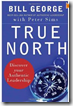
A book I’ve found invaluable in thinking about all of these areas is True North by Bill George.  A staple at HBS’s Authentic Leadership Development class.  The book includes interviews with a large number of the greatest leaders of our society and tells their stories in a series of vignettes. 


While by no means a complete roadmap to the rest of your life, this simple framework can serve as an invaluable compass.  When I have some time to myself I’ll think about my priorities in life and fill out the boxes.  Then I keep the framework on my wall and look at it every today to ensure that I’m spending my time on the most important things in my life. Not the most urgent minutia of the day.  That’s happiness.